ServicesTree Trimming and Removal
Tree Trimming and Removal in Winter Springs
We trim trees so they stay healthy and clear of your roof, and we take down the ones that have become a risk. If a storm did the damage, we photograph it and give you a written estimate you can show your insurance company.
When a Tree Needs Trimming and When It Needs to Go
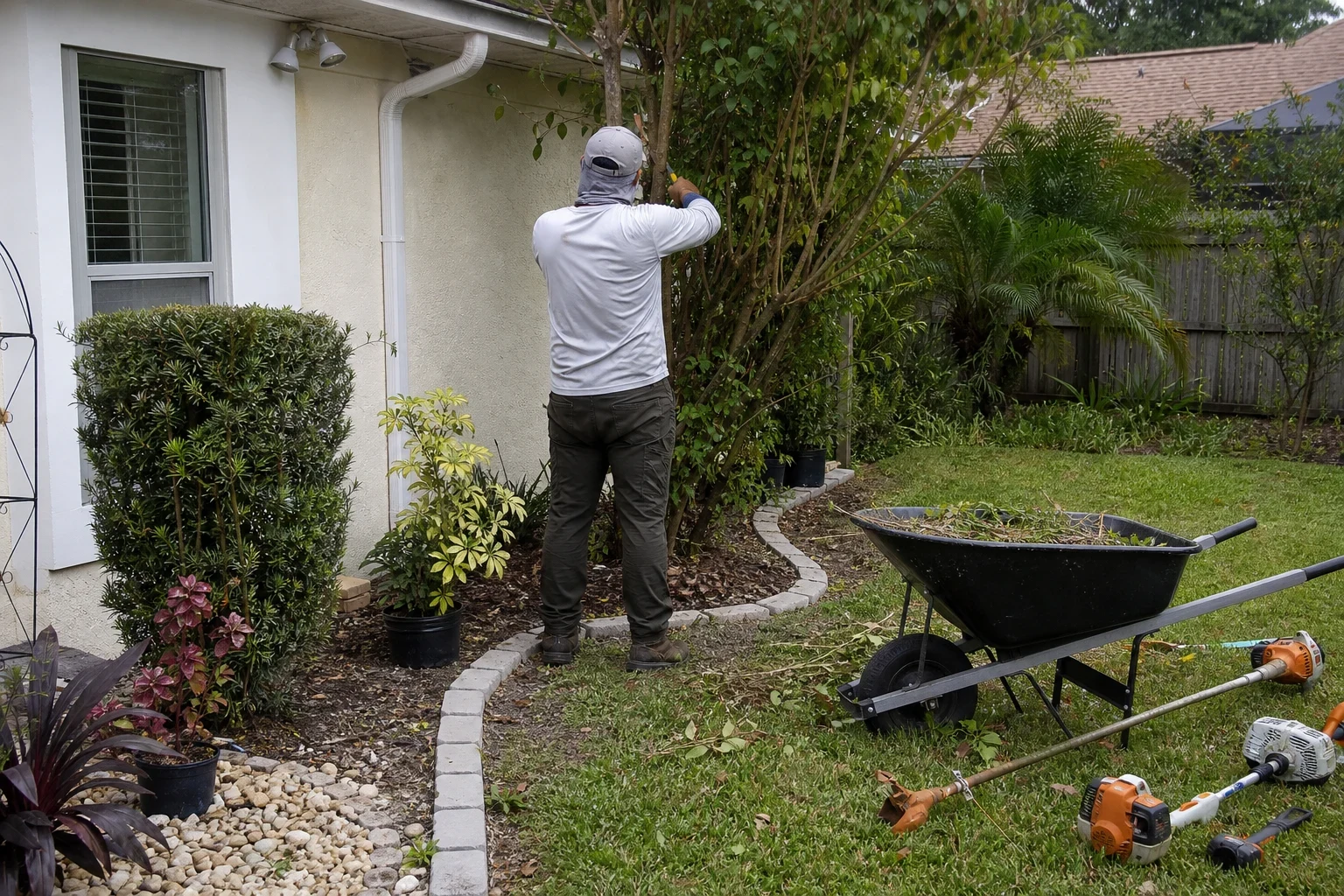
Most trees just need good pruning. Dead wood comes out, limbs over the roof get cut back, and the crown gets thinned so wind can pass through. That last part matters here. Thick canopies on laurel oaks and water oaks act like sails in a summer thunderstorm or a hurricane.
Some trees can't be saved. Deep trunk rot, a split at the main fork, or a heavy lean toward your home are signs it's time for removal. We'll tell you which way we'd go and why, even when trimming is the smaller job.
After a storm, a lot of people aren't sure what their policy covers. We don't act as your adjuster and we can't promise a claim gets paid. What we can do is document the damage clearly and put the work in writing, line by line.
What Our Tree Work Covers
- Structural pruning
- We remove dead, crossing and weak limbs with clean cuts at the branch collar. That helps the tree seal the wound instead of rotting back into the trunk.
- Roof and line clearance
- We cut limbs back from your roof, siding and driveway. Branches rubbing shingles wear them down, and overhanging limbs drop debris that holds moisture.
- Crown thinning
- Opening up a dense canopy lets wind through and brings light back to the lawn underneath. We don't top trees. Topping causes weak regrowth that breaks easier later.
- Full tree removal
- Large trees near your home come down in sections with ropes and rigging, not one big drop. We lower pieces to the ground so your roof, fence and beds stay intact.
- Storm damage documentation
- Before we cut anything, we take dated photos of the tree, the break and anything it hit. You get those photos and a written estimate to share with your insurance company.
- Cleanup and haul-off
- We chip brush, haul away wood and rake the area. If you want the stump gone too, our stump grinding service can be added to the same visit.
Signs Your Tree Needs Attention
Limbs over the roof
Branches touching or hanging over your roof are the first ones to come down in high wind. Cutting them back now is far easier than a repair later.
Dead branches in the crown
Bare, brittle limbs with no leaves in the growing season can drop without warning. They're common on older laurel oaks.
Mushrooms or soft wood at the base
Fungus growing on the trunk or roots usually means decay inside. We'll check how far it goes before saying anything about removal.
Cracks or a split fork
A crack where two main stems meet is a weak spot. It often gets worse each storm season.
A new lean
A tree that has always leaned is one thing. A tree that started leaning after a storm, with soil heaved up on one side, needs a look soon.
Storm damage you're unsure about
If a limb hit your home or fence and you're thinking about a claim, have the damage documented before cleanup starts.
What Affects the Price of Tree Work
Every tree is different, so we price after seeing it. The walkthrough and estimate are free, and the number on paper is the number we work to. For a large removal or a bigger yard project, you can spread the cost out: we can finance as much as $100,000, paid back over anywhere from two to twelve years, and paying it off early costs you nothing extra.
Size and type of tree
A tall oak with a wide crown takes more time and gear than a small ornamental. Hardwood is also heavier to lower and haul.
How close it is to your home
Trees over a roof, pool cage or power line need rigging and more careful cuts. Open space lets us drop sections faster.
Access for equipment
A tree in a fenced backyard with a narrow gate means more hand carrying. Easy side access saves labor.
Condition of the wood
Rotted or storm-split trees are less predictable to climb and cut. That can change how we take them down.
Stump and cleanup choices
Hauling all wood, leaving firewood, or adding stump grinding each change the total. We list them separately so you can pick.
How a Tree Job Runs
- 1
Free walkthrough
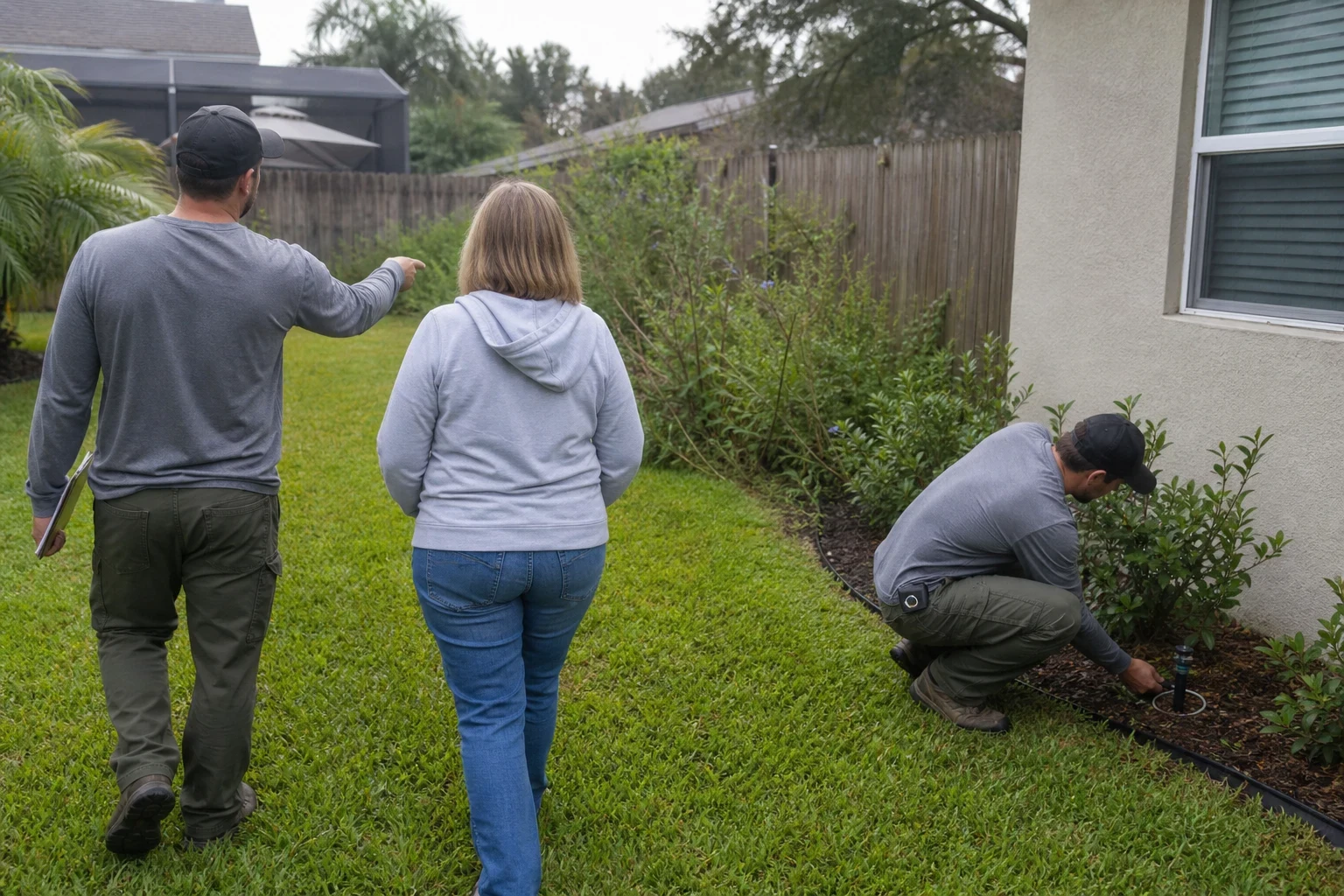
We come out, look at the tree from all sides and talk about what you want. If there's storm damage, we photograph it right then.
- 2
Written estimate
You get a line-item estimate: what gets cut, how it comes down, cleanup and any stump work. We also check whether the city needs a permit for a removal before we schedule it.
- 3
Work day
We set up drop zones, cover beds and protect anything close by. Our crew climbs or rigs the tree and lowers wood in controlled pieces.
- 4
Cleanup and final look
Brush gets chipped, logs get hauled, and the yard gets raked and blown off. We walk the property with you before we leave.
Tree Trimming and Removal Questions
Will my insurance pay to remove a fallen tree?
It depends on your policy and what the tree hit. Many policies treat a tree that damaged a structure differently from one that fell in open yard. We can't decide that for you, but we can give you dated photos and a written estimate so your adjuster has what they need.
Do I need a permit to take a tree down?
Sometimes. Winter Springs, like many cities around here, has rules for removing larger or protected trees. We check what applies to your tree before we schedule the work, so you're not caught off guard.
What should I ask a tree company before they start?
Ask who is covered if something goes wrong near your home. We're a family-owned company, business licensed and fully insured. That matters with tree work, since it happens close to your house and sometimes right over your roof.
When is the best time to trim?
For most shade trees, late winter or early spring is ideal, before new growth. Getting limbs off the roof before hurricane season starts in June is also smart. Dead or hanging limbs should come out whenever you notice them.
Will you leave a mess in my yard?
No. We chip the brush, haul the wood unless you want to keep some, and rake and blow the area. If ruts or bare spots show up, we'll point them out and can talk about lawn care or sod installation to fix them.
Can you just thin my tree instead of removing it?
Often, yes. If the trunk and roots are sound, good pruning can lower the risk a lot. We'll tell you honestly if thinning is enough or if the tree is past that point.
Have Us Look at Your Trees
We'll walk your yard, check each tree you're worried about and give you a written estimate. If there's storm damage, we'll photograph it before anything gets cut.