ServicesSod Installation
Sod Installation in Winter Springs
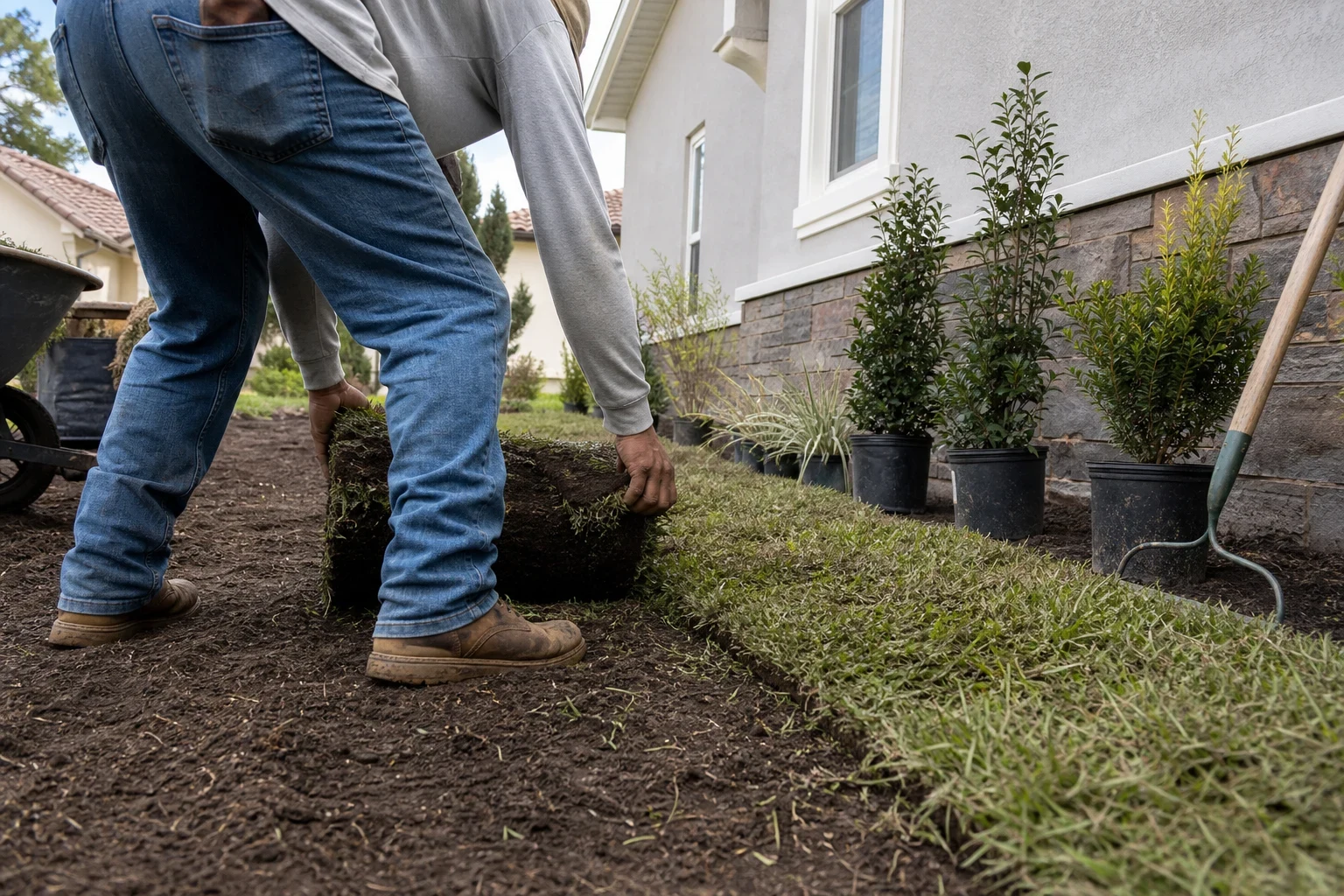
A new lawn only lasts if the ground under it is right. We pull the old turf, level and grade the soil, check your sprinklers, and lay fresh sod the day it arrives. You get a clear watering plan so it roots instead of browning out.
When New Sod Is the Right Call
Sod makes sense when more than about a third of the lawn is dead, thin or full of weeds. At that point, patching and feeding usually cost more over time than starting fresh. If your lawn just needs regular mowing, feeding and weed control, our lawn care service is the cheaper fix, and we will tell you so.
Around here, most lawns are St. Augustine, with Zoysia and Bahia close behind. Sandy Central Florida soil drains fast and holds few nutrients, so prep matters more than the grass itself. We are a family-owned crew, and we lay sod the way we would at our own house.
What the Job Includes
- Old turf removal
- The existing grass comes out in strips, roots and all, and we load it up and take it with us. Some crews skip this and roll new grass right on top of the dead lawn and weeds. That shortcut is a big reason new lawns fail within a few months.
- Grading and soil prep
- We fill low spots, rake out roots and debris, and slope the ground away from your home so water does not pool against the slab. Where the sand is poor, we add topsoil.
- The right grass for the spot
- Floratam St. Augustine likes full sun. Shady areas under oaks need a shade-tolerant variety or Zoysia. Bahia handles drought and low upkeep but looks coarser. We match the grass to the light and the use.
- Tight, staggered seams
- Pieces go down in a brick pattern with edges butted snug, cut clean around beds, walks and trees. Then we roll it so the roots touch soil.
- Sprinkler check
- Before we lay a single piece, we run your zones and look for dry spots, broken heads and bad coverage. If repairs are needed, our irrigation service can handle them first.
Signs Your Lawn Needs New Sod
Large dead or bare patches
Brown areas that do not green up after rain or feeding often mean the roots are gone. Chinch bugs and fungus do this to St. Augustine in summer.
Weeds have taken over
When weeds outnumber grass, spraying just leaves bare dirt. Starting over is often faster.
Damage after a storm or construction
A fallen tree, heavy equipment or standing water can kill a section of lawn. We can photograph and measure it before work starts.
Puddles and uneven ground
Low spots that hold water rot the grass and breed mosquitoes. Regrading under new sod fixes the cause, not just the look.
Thin grass in shade
If the trees grew and the lawn faded, the old grass may simply be wrong for the spot now.
How a Sod Job Goes
- 1
Free walkthrough
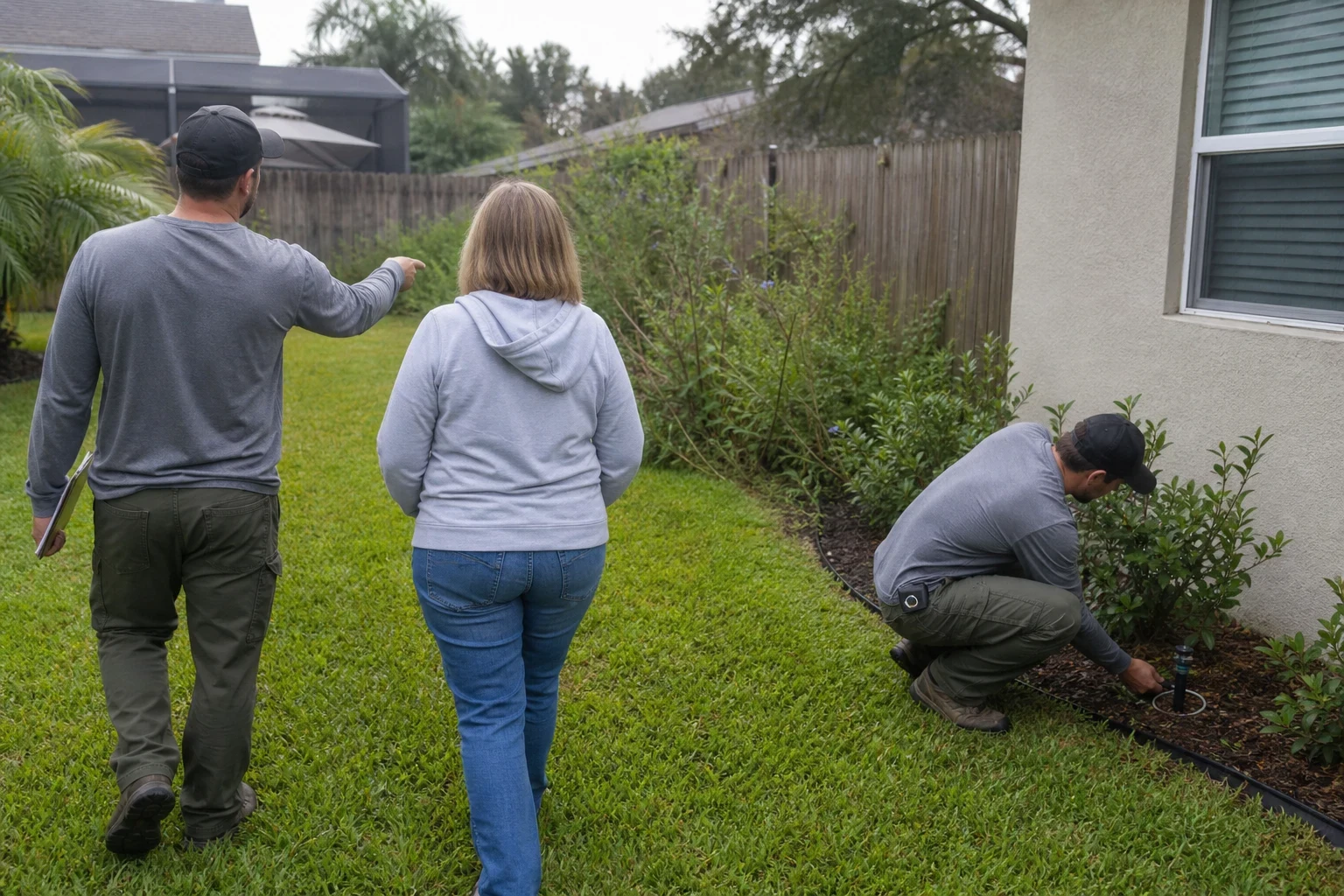
We walk the yard with you, measure the square footage, check sun and shade, and test your sprinklers. You get a written estimate broken out by line item.
- 2
Prep day
We strip the old turf, haul it off, and grade the soil. On most yards this is the biggest part of the job.
- 3
Sod day
Pallets arrive fresh, and we lay them the same day so the grass does not heat up and yellow on the pallet. We roll it, water it in, and clean the driveway and walks before we leave.
- 4
Watering plan
We leave you a simple schedule. New sod needs water every day for the first couple of weeks, then less as it roots. We will explain the current watering rules for new lawns in your area.
What Sets the Price
Most of the cost is in labor and prep, not the grass. Two yards the same size can price very differently because of what is underneath. Your written estimate shows each piece so nothing shows up later as a surprise. If you want to spread payments out, we have financing on 2–12-year terms for amounts up to $100,000, with no prepayment penalties.
- Square footage
- Sod is sold by the pallet, so the measured area drives the material cost and how many hands we need.
- Grass variety
- Bahia usually costs less than St. Augustine. Zoysia and shade-tolerant varieties usually cost more.
- Removal and grading
- Thick old turf, roots, stumps or big low spots add time. Added topsoil adds material.
- Access
- A wide open front yard is quicker than a fenced backyard where everything goes through a narrow gate by wheelbarrow.
- Sprinkler repairs
- Broken heads or poor coverage should be fixed before sod goes down, and that is priced separately.
Sod Installation Questions
Something not covered here? (407) 499-8081
When is the best time to lay sod here?
Spring through early fall is best, because warm soil and summer rain help roots grab fast. Sod laid in winter still works, but it roots slower and stays tan longer. We can install most of the year.
How soon can we walk on the new lawn?
Go easy on it for roughly the first two to three weeks. Lift the edge of a piece now and then. When it resists and stays put, the roots have grabbed the soil underneath, and that is also when the first mow can happen.
Will insurance pay for new sod after storm damage?
Sometimes, but coverage for lawns is often limited, and your policy and adjuster decide. We do not act as your adjuster. What we can do is photograph the damage, measure the area, and give you a line-item estimate you can send with your claim.
Can you lay sod over my existing grass?
We do not. The old grass rots underneath and keeps the new roots from reaching soil. Removing it is part of every job we quote.
What if something gets damaged while you work?
We are business licensed and fully insured. That matters on a sod job, with a crew, a sod cutter and heavy pallets moving across your property near walks, beds and the driveway.
Ready for a Lawn That Takes Root?
We will walk your yard, check the sprinklers, and give you a free written estimate. We work in Winter Springs, Oviedo, Casselberry and nearby towns.