ServicesHardscape Installation
Hardscape Installation in Winter Springs
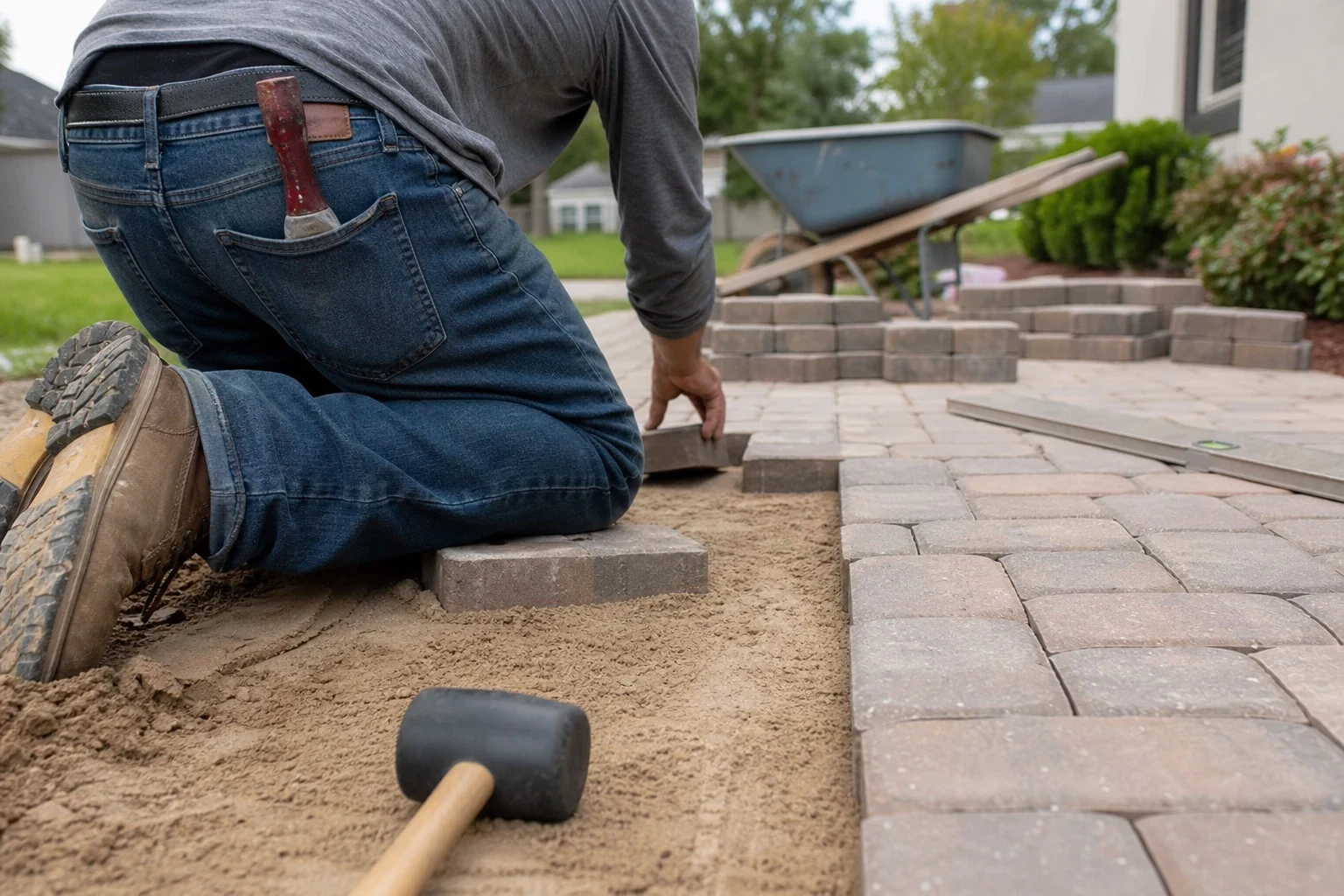
We build paver patios, walkways, driveway extensions and low retaining walls that stay flat and shed water. The work starts with the base you never see. If storm damage brought you here, we can also photograph and write up what we find for your insurance claim.
Hardscape that holds up after the rain
Most paver problems are base problems. Our sandy soil drains fast but shifts easily, and a patio laid on a thin or poorly packed base will sink, rock and grow weeds in the joints within a few seasons. We dig out, lay a compacted crushed base in layers, set the pitch so water runs away from your home, and lock the edges so nothing creeps.
Some calls come after a storm. A fallen limb cracked the pool deck pavers, or a washout undermined a walkway. In those cases we take dated photos, measure the damaged area, and give you a written line-item estimate you can hand to your insurance company. We explain how claims usually move, but we are not the adjuster and we will not tell you what your policy covers.
What the work includes
- Patios and pool decks
- Concrete or travertine pavers set on a compacted base with a gentle slope for drainage. We plan the size around how you actually use the space, like a table, a grill or a walkway to the screen door.
- Walkways and garden paths
- Front entry walks, side-yard paths and stepping routes to the shed or gate. Curves are cut clean, not filled with broken pieces.
- Driveway extensions and parking pads
- These carry vehicle weight, so the base goes deeper and the pavers are rated for traffic. We check where the water goes before we widen anything.
- Low retaining and seating walls
- Segmental block walls for raised beds, slopes and seating around a fire area. Each one gets a gravel backfill and drainage so water does not push it over.
- Edging, sand and sealing
- Edge restraint keeps the field from spreading. Polymeric sand in the joints slows weeds and ants. Sealing is an option we talk through, not an automatic add-on.
- Repair of existing pavers
- We lift sunken or root-heaved sections, fix the base and relay the same pavers when they are still good.
Signs your hardscape needs work
Pavers that rock or sink
A paver that moves under your foot means the base below has washed out or was never packed. Resetting the top does not fix it for long.
Water pooling against the house
If rain sits on the patio or runs toward your slab, the pitch is wrong. That is worth fixing before it becomes a moisture problem.
Root heave and trip edges
Oak and other tree roots lift pavers into ridges. We can reset the area and talk with you about the tree, which our tree trimming and removal crew can look at.
Storm or impact damage
Cracked pavers under a fallen limb or a wall that leaned after heavy rain. Photograph it before anything is moved, then call us to document the rest.
Weeds and ants in every joint
Joints that keep losing sand usually point to missing edge restraint or a base that is shifting.
How a hardscape job runs
- 1
Walkthrough and measurements
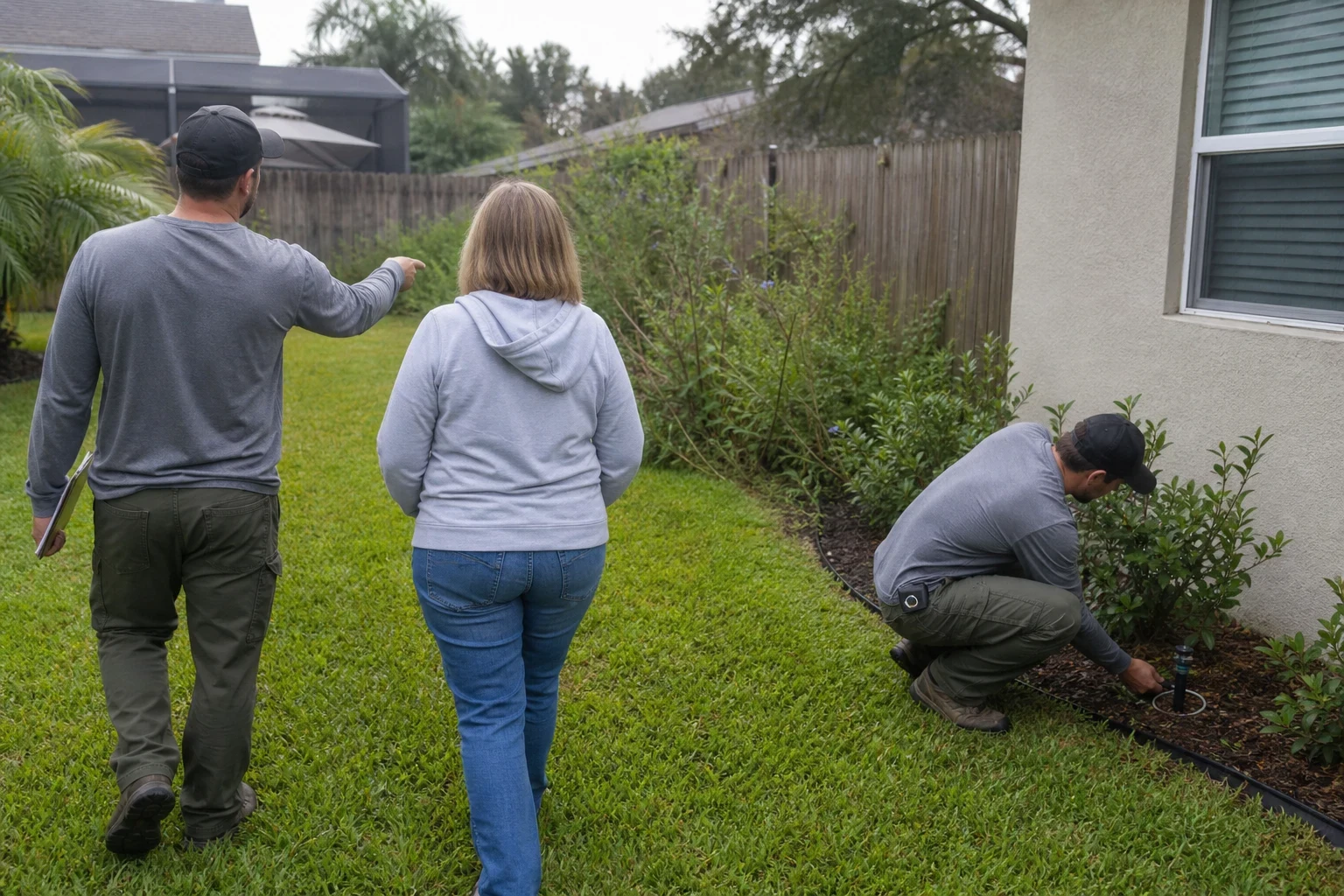
We walk the area with you, check grades, find the downspouts and note any sprinkler lines. For storm damage we take photos and measurements for your records.
- 2
Written estimate and layout
You get a line-item estimate and a simple layout showing size, pattern and material. If your neighborhood has an HOA, we give you what you need for their approval. If the project needs a permit, we pull it.
- 3
Excavation and base
We mark utilities, dig to the right depth, and compact the base in lifts. We cap irrigation heads in the way and move them so your system still covers the lawn.
- 4
Laying, cutting and finishing
Pavers go down on a screeded sand bed, edges get cut and restrained, joints get filled and the surface gets compacted. Then we clean up, haul off spoils and walk the finished job with you.
What moves the cost
Every estimate is written line by line so you can see where the money goes. The biggest swings come from size, the material you pick and what we find when we dig. We will tell you up front if something might change the number.
- Square footage and shape
- More area means more base, sand and labor. Curves and patterns with lots of cuts take longer than a straight running bond.
- Paver or stone choice
- Standard concrete pavers, larger format pavers and travertine all price differently, and some need a thicker base.
- Access and digging
- A backyard with a narrow side gate means hand carts instead of machines. Old concrete, roots or buried debris add removal time.
- Walls, steps and drainage
- Retaining walls, steps and drains add materials and labor beyond a flat patio.
- Permits and HOA requirements
- Some projects need a permit or a specific material to meet HOA rules. We include those steps on the estimate when they apply.
Hardscape questions we hear
Something not covered here? (407) 499-8081
Pavers or a poured concrete slab?
Pavers flex a little and can be lifted and relaid when roots or settling move them. A slab is often less up front but cracks are hard to hide. We will tell you which fits your yard and budget, and why.
Will you help with an insurance claim for storm damage?
We document what we find with dated photos, measurements and a written line-item estimate for the repair. You hand that paperwork to your insurance company with your claim. We can explain how the process usually goes, but your adjuster decides coverage, and we will not promise an outcome.
What happens if something gets damaged while you dig?
We are a family-owned company, business licensed and fully insured. That counts most on jobs like this, with heavy equipment working close to your home. We also mark utilities and protect what we can before the first shovel goes in.
Will the work damage my lawn or sprinklers?
We lay down protection where equipment travels and move irrigation heads that sit in the dig area. If turf along the edge gets torn up, we can patch it, and our sod installation work covers bigger areas.
Can I pay for a bigger project over time?
Yes. Financing is available for amounts up to $100,000, with terms anywhere from 2 to 12 years. Paying it off early costs you nothing extra. Ask about it when you phone, and we will go over the details at the walkthrough.
How long does a typical patio take?
Most residential patios and walkways take a few working days once materials arrive. Heavy rain can pause base work, since we will not compact soaked ground. We give you a realistic schedule before we start.
Let's look at the space together
We will walk the area, check the grade and drainage, and give you a free written estimate. If there is storm damage, we will document it while we are there.