ServicesMulch and Beds
Mulch and Bed Care in Winter Springs
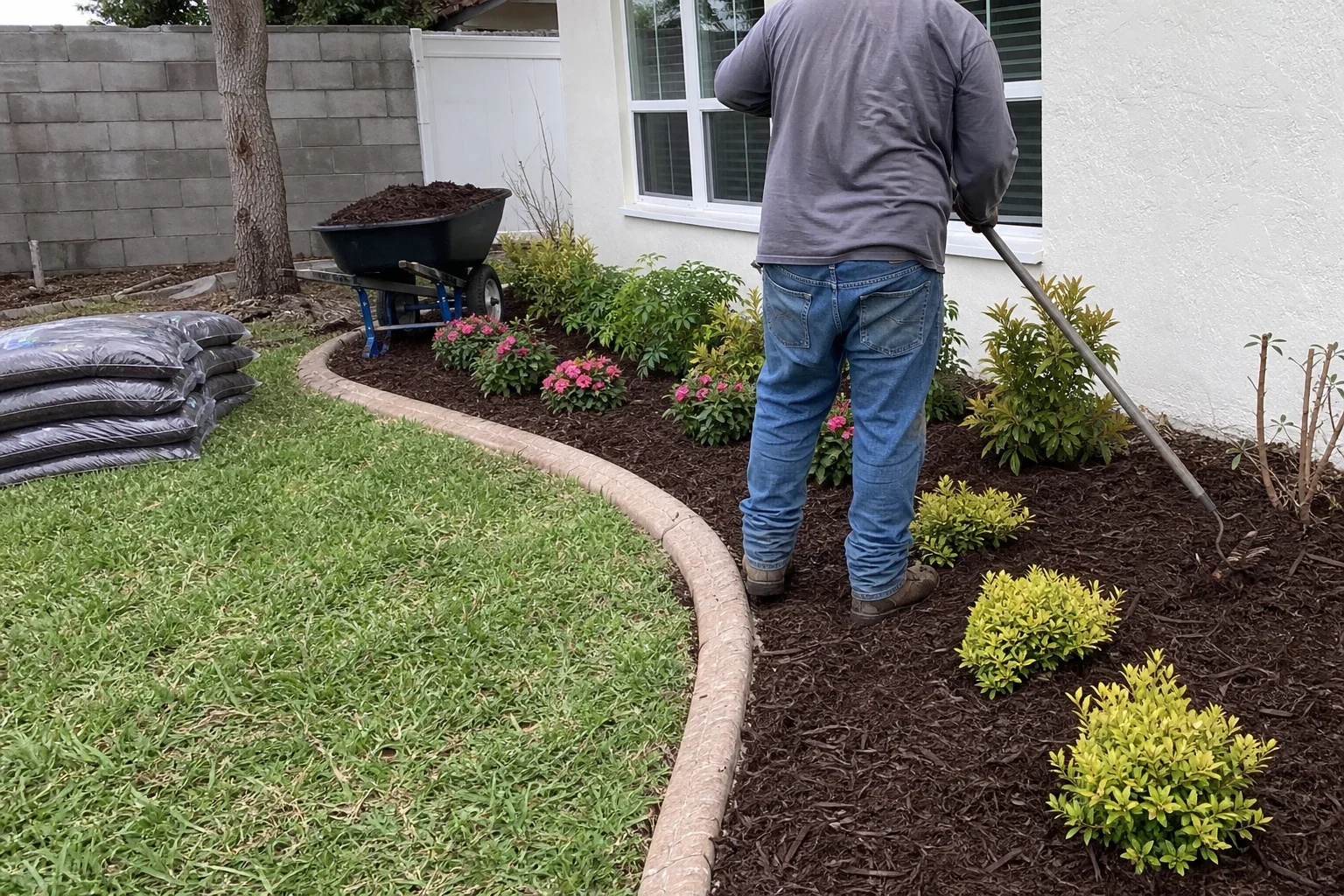
Tired beds are mostly weeds, thin spots and mulch piled against the wrong things. We pull the weeds, recut the edges, fix the depth and lay fresh mulch so your plants stay cooler and wetter, and your home looks cared for.
What a good bed job actually fixes
Mulch does real work. It shades the soil, slows evaporation, keeps weed seeds from sprouting and breaks down into the sandy ground over time. When it gets too thin, weeds win. When it gets too thick, roots stay soggy and trunks start to rot.
Most beds we see need more than a top-up. Old mulch has matted into a crust that sheds water. Edges have disappeared under runner grass. Mulch is stacked against siding or tree bark. We sort out what is underneath first, then put down fresh material at two to three inches.
If a storm has torn up your beds, we also photograph the damage and write it up line by line. That gives you something clear to hand your insurance company. Whether any of it is covered depends on your policy and the adjuster, and we will tell you that straight.
What's included in our mulch and bed work
Weeding down to the root
We pull weeds by hand and dig out the runners that creep in from the lawn. Spraying alone leaves roots behind, so we do not rely on it.
Clean, recut edges
We cut a crisp line between bed and lawn so grass stays out and mulch stays in. Where you want a firmer border, we can talk about edging material during the walkthrough.
Old mulch checked, not just buried
Crusted or moldy mulch gets broken up or hauled off. Piling new mulch on a hard layer just builds a lid that rain runs off.
Your choice of material
Pine bark, pine straw, cypress, eucalyptus or rock. We explain how each one holds up in heavy summer rain so you can pick what fits your yard and budget.
Even depth, clear of trunks and walls
We spread two to three inches across the whole bed. Around trees we leave the root flare showing. Along the house we stop short of the siding and slab, so the wall stays dry and bugs have less cover.
Cleanup before we leave
We blow off walks, driveways and patios and haul away bags and debris. Your home should look better than when we pulled up.
Signs your beds need attention
- You can see bare soil
- Mulch breaks down and washes out, especially after a wet summer. Bare patches dry fast and sprout weeds within weeks.
- Grass is growing into the beds
- Once runners cross the edge, they spread under the mulch. The sooner the edge is recut, the less digging it takes.
- Mulch volcanoes around trees
- Mulch heaped up against a trunk holds moisture on the bark and invites rot and insects. It should be spread flat with the base of the tree showing.
- Water runs off instead of soaking in
- A gray, matted top layer sheds water like a roof. Your plants go thirsty even when the irrigation runs on schedule.
- Storm damage in the beds
- Washed-out mulch, crushed shrubs or limbs lying across plantings. We document what we find before anything gets cleaned up, so you have a record.
How a bed job runs
- 1
Walk the beds with you
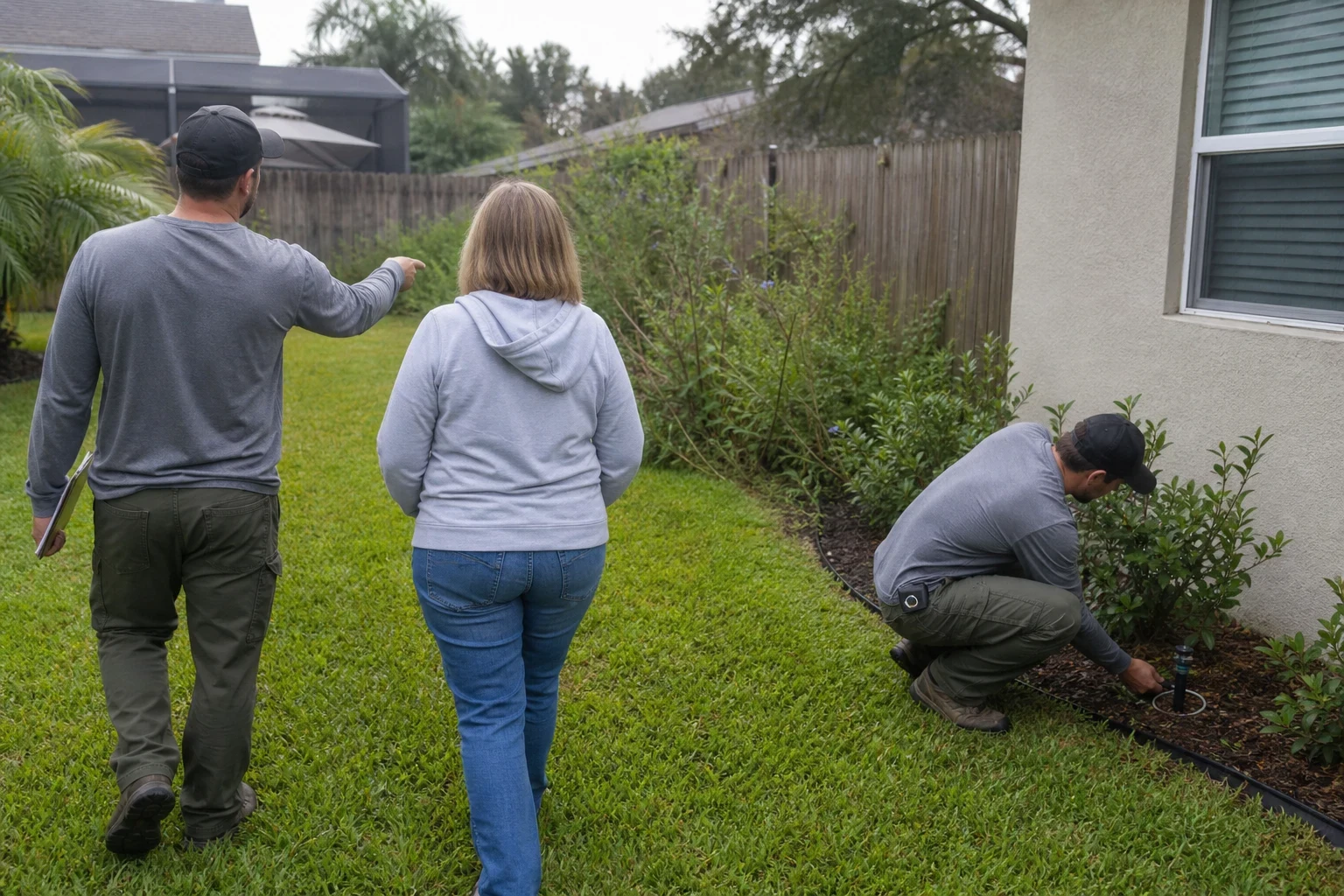
We look at each bed, check the depth of old mulch and note problem spots. You get a written, line-item estimate. If storm damage is involved, we take photos at this stage.
- 2
Clear and prep
On the job day we pull weeds, dig out runners and deal with the old layer. We also trim back anything crowding the edges so the new line stays clean.
- 3
Cut edges and lay mulch
We recut the bed lines, then spread mulch evenly by hand, keeping it off trunks, stems and your foundation. Sprinkler heads stay uncovered.
- 4
Clean up and walk it again
We blow off hard surfaces, haul away waste and walk the finished beds with you if you are home. Most single-home jobs wrap up in one day.
What moves the price
Every yard is different, so we price after seeing it. The estimate shows each part of the job on its own line. You will know what you are paying for before we start.
- Square footage and depth
- Bigger beds and thin existing mulch both mean more material. We measure instead of guessing.
- Material choice
- Pine straw, bark, cypress and rock all cost different amounts and last different lengths of time. Rock lasts longest but costs more up front.
- How much prep it needs
- A bed with a few weeds is quick. A bed overrun with runner grass, or a thick crust of old mulch that has to be hauled off, takes more labor.
- Access to the beds
- Beds behind fences or far from the driveway mean more trips with the wheelbarrow. Narrow side yards add time.
Mulch and bed questions
- How often should I replace mulch?
- Most homes here need a refresh about once or twice a year. Our heavy summer rains wash out and break down organic mulch faster than in drier places. We check depth during the walkthrough and only recommend what the beds need.
- Is pine straw or pine bark better?
- Pine straw is light, knits together and stays put on slopes. Bark looks neater on flat beds but larger nuggets can float off in a downpour. We will tell you which holds up better in your yard.
- Do you put down landscape fabric?
- We can, but we do not push it. Fabric helps under rock. Under organic mulch it often ends up with weeds rooting on top of it. We explain the tradeoff and let you decide.
- Will mulch near my house cause termites?
- Mulch does not bring termites, but damp material against the foundation makes a friendly spot for them. We keep a gap between the mulch and your siding and slab.
- Will insurance pay to redo my beds after a storm?
- Sometimes, sometimes not. Many policies limit coverage for landscaping. We photograph the damage and give you a line-item write-up to share with your insurer, but your adjuster makes the call.
- What if something gets broken while your crew is working?
- We point out fragile spots like sprinkler heads, low lights and potted plants before we start, and we work around them by hand. We are a family-owned company, business licensed and fully insured. If a mistake does happen on our end, it is on us to make right, not on you.
Let's look at your beds
We will walk your beds, tell you honestly what they need and put it in writing. No charge for the visit.