ServicesLawn Care
Lawn Care in Winter Springs
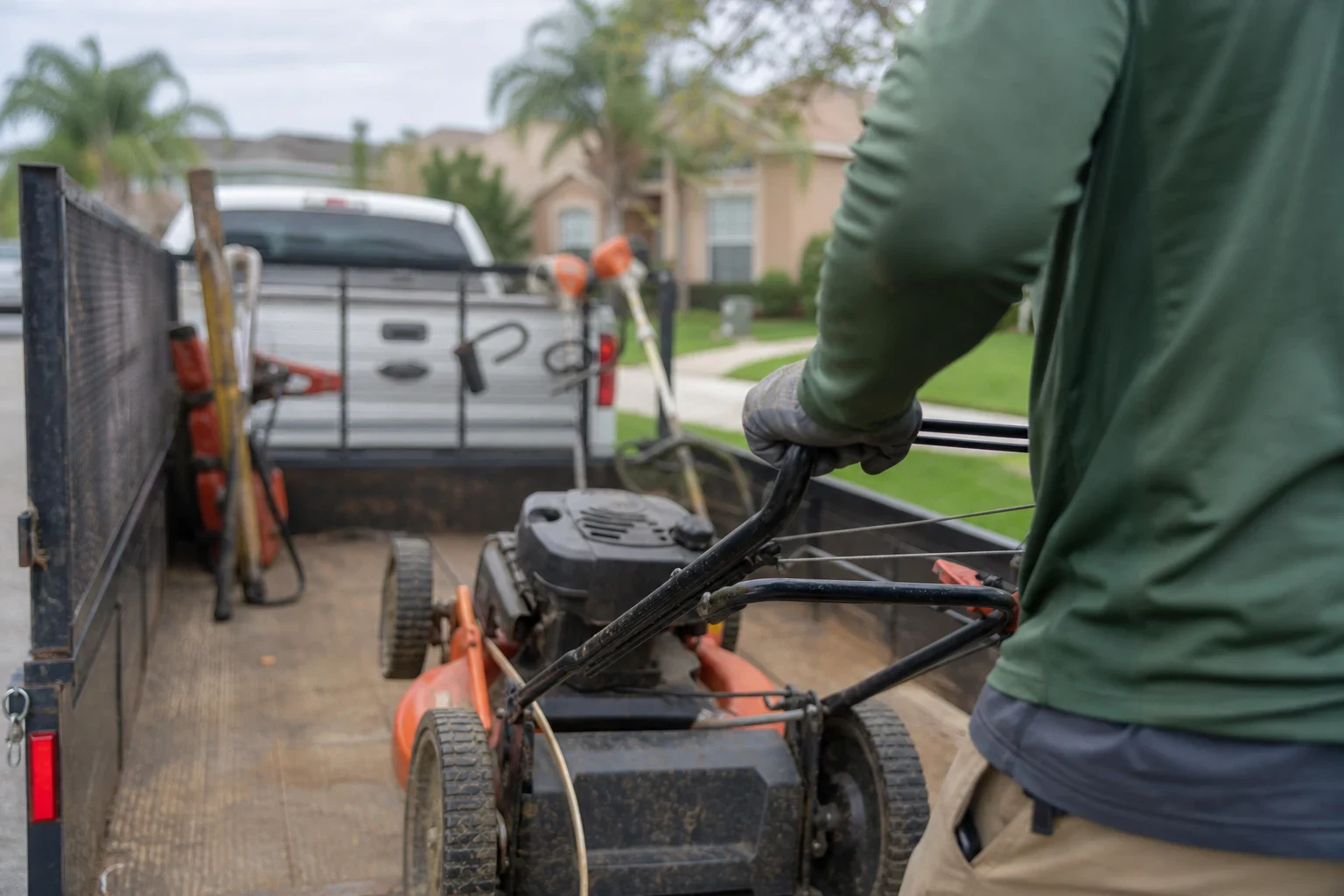
We mow, edge, feed and keep an eye on your grass so problems get caught early. Brown patches, weeds or thin spots near the shade, we tell you what's causing it and what it takes to fix. No upsell on stuff you don't need.
What Lawn Care Covers and When It Makes Sense
Lawn care is the steady, routine work that keeps grass thick and green. Mowing at the right height, clean edges, feeding on a schedule and spotting trouble before it spreads. Most yards here are St. Augustine, with some Zoysia and Bahia. Each one wants different treatment.
It's the right call if your lawn is mostly healthy and you want it kept that way, or if it's slipping and you want someone watching it every visit. If more than half the yard is dead or bare, routine care won't bring it back. Then we'll talk honestly about sod installation instead.
We're a family-owned crew, business licensed and fully insured. You deal with the same people each time, and they get to know your yard.
What's Included in Our Lawn Care
Mowing at the right height
St. Augustine does best cut tall, around 3.5 to 4 inches. Cutting too short stresses it and lets weeds in. We set the deck for your grass type, not one height for every yard.
Edging and trimming
Clean lines along driveways, walks and beds. We string-trim around fences, trees and anything the mower can't reach.
Cleanup after every visit
Clippings get blown off the driveway, walks and patio. We don't blow them into the street or storm drain.
Feeding on a schedule
We fertilize at the times of year your grass can use it and follow the county's summer fertilizer limits. Sandy soil here lets nutrients wash through fast, so timing matters more than amount.
Weed and pest checks
Each visit we look for chinch bug damage, brown patch fungus and weeds like dollarweed. If we see something, we show you and explain the options before treating anything.
Notes you can actually use
If we spot a broken sprinkler head or a dry zone, we tell you. Fixes can be handled through our irrigation service if you want.
Signs Your Lawn Needs Regular Care
- Yellow or straw-colored patches
- Irregular dry patches in full sun, often near the driveway, are a classic chinch bug sign in St. Augustine. Caught early, it's a small fix.
- Brown rings that spread
- Circular brown areas that grow in warm, wet weather usually point to brown patch fungus. Too much water at night makes it worse.
- Weeds taking over
- Dollarweed and crabgrass move in where grass is thin or cut too short. Pulling them doesn't solve why they're there.
- Thin grass under trees
- Shade thins most turf. Sometimes the answer is raising the mower, sometimes it's turning that spot into a bed. Our mulch and beds service can help there.
- Storm damage you're not sure about
- After a big storm, ruts, debris and dead spots can show up. We can photograph what we find and write it down for you. Your insurance company decides what's covered, not us.
How Our Lawn Care Works
- 1
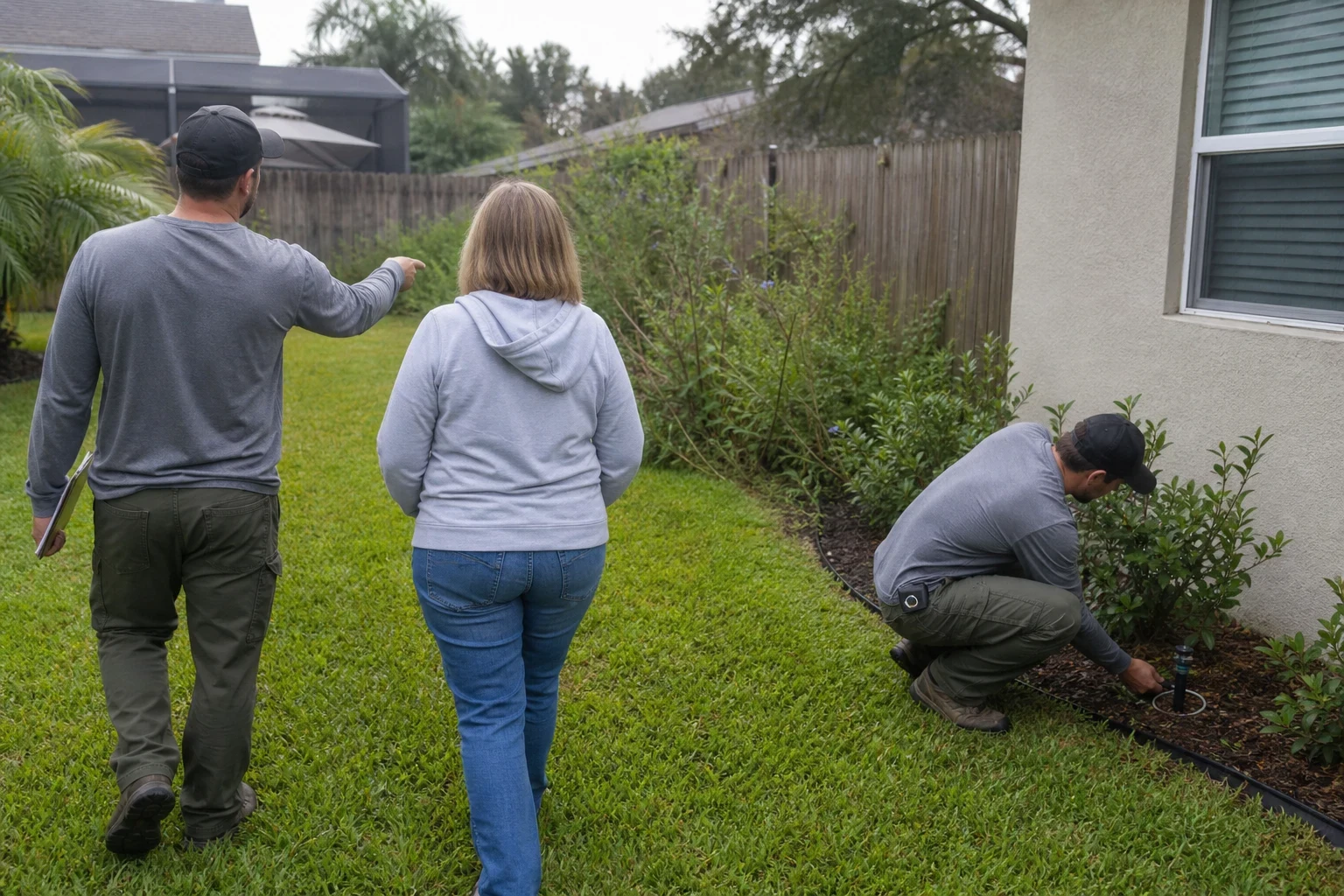
Walk the yard with you
We come out and look at the grass, soil, shade and sprinklers. You tell us what bugs you about the lawn. It's free.
- 2
Give you a plan in plain words
We explain what your lawn needs, how often we'd come and what it costs. If something's not worth doing, we say so.
- 3
Show up and do the work
On visit day we mow, edge, trim and check for problems. Gates get closed behind us and pets stay safe.
- 4
Tell you what we saw
If there's a bug problem, a fungus or a broken sprinkler, you hear about it. Photos help when you're not home.
What Moves the Cost of Lawn Care
Lawn care pricing comes down to how much grass there is and how much work it takes to keep it right. We'll give you a clear number after the walkthrough. No surprise charges added later.
- Lawn size
- More square footage means more mowing and edging time. Front and back yards are measured together.
- How often we visit
- Grass grows fast in the summer rainy season and slows down in the cooler months. Visit frequency follows that.
- Access and obstacles
- Tight side yards, gates, slopes and lots of beds or trees to trim around add time.
- Treatments needed
- Basic mowing costs less than a plan that includes feeding and pest or weed control. You pick what you want.
- Condition at the start
- An overgrown lawn needs a catch-up visit before regular service. After that, it settles into the normal rate.
Lawn Care Questions
- How often should my lawn be mowed?
- In the warm, rainy months most lawns here need mowing every week. In the cooler, drier months every two weeks is often enough. We adjust as the grass slows down or speeds up.
- Why is my St. Augustine turning yellow in the sunny spots?
- Chinch bugs are the most common reason, especially near hot pavement. Drought stress can look similar. We check the edge of the patch to tell which one it is before treating anything.
- Will you water my lawn?
- Watering comes from your sprinkler system. We can check whether it's covering the yard evenly and set it to run in the early morning. Our irrigation service handles repairs and new zones.
- Does homeowner's insurance cover lawn damage after a storm?
- Sometimes, and coverage for grass is often limited. We can take photos and write up what we see so you have a record for your adjuster. We won't tell you what's covered, because that's the insurance company's call.
- Can I pay over time for bigger lawn work?
- Yes. You can borrow as much as $100,000, and the loan can run anywhere from two years to twelve. If you want to pay it off early, there's no penalty for that. Most folks use it on larger projects like new sod or landscape design, not routine mowing.
Let's Take a Look at Your Lawn
We'll walk your yard, point out what's working and what isn't, and give you a free estimate. No pressure to sign up for anything.